
Man in the Mirror
What do you see?

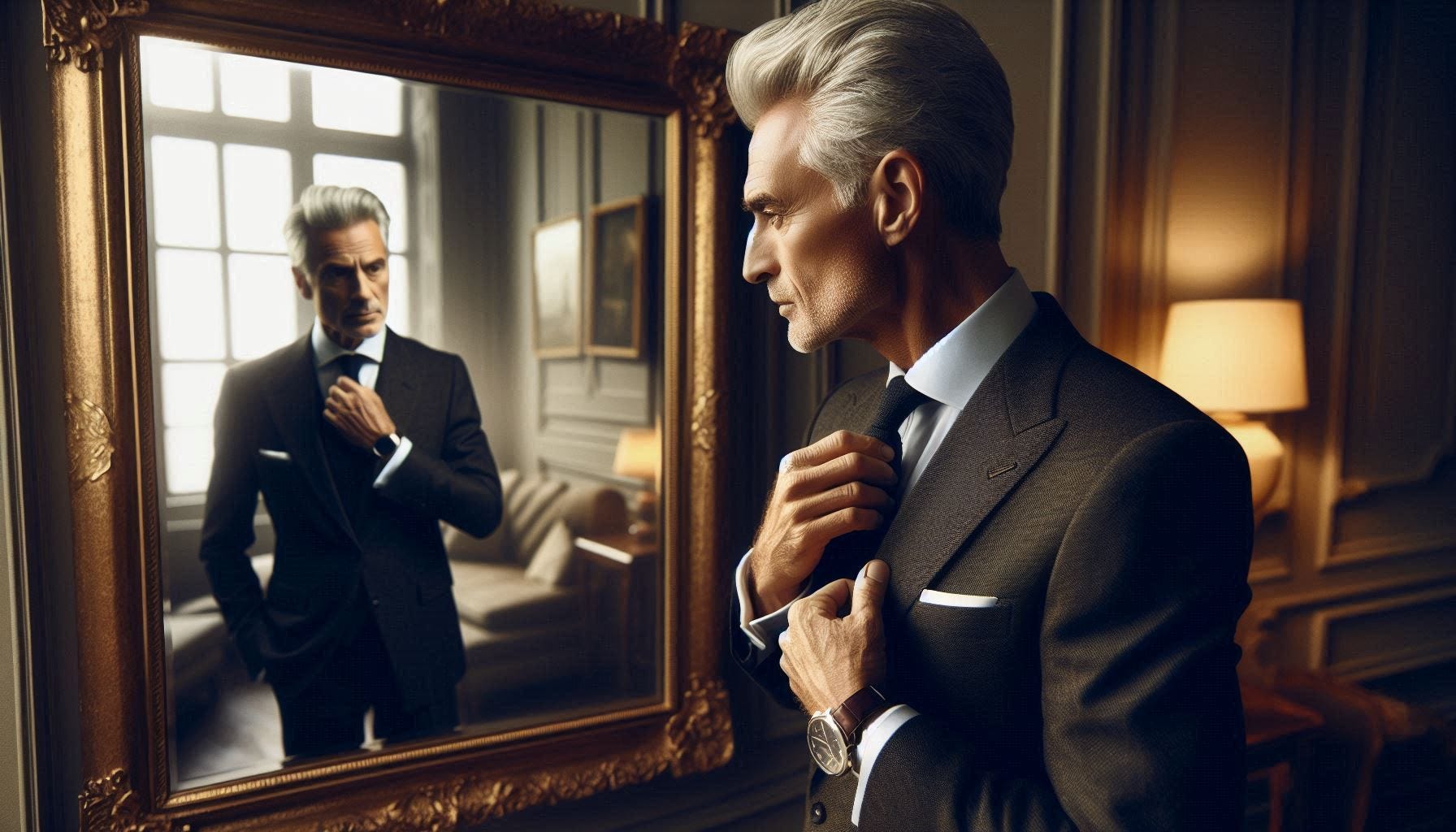
Michael Jackson’s song ‘Man in the Mirror’ is a message for us all, but I think many Western politicians could learn from its lyrics right now. The amount of whining we hear from politicians who feel hard done by and misunderstood is unbearable. This is despite their incessant and overbearing criticism of the opposition and the electorate. They label people as lazy if they seek a work-life balance or if they advocate for technology that could ease the burden of work rather than merely making the top 1% richer.
Their attempts to show themselves as strongmen only backfire and show many of them to be extremely sensitive when they get as good as they give, but insensitive when it comes to the needy. I am reminded how Jackson sings:
I see the kids in the streets
With not enough to eat
Who am I to be blind?
Pretendin’ not to see their needs
A summer disregard, a broken bottle top
And a one-man soul
They follow each other on the wind ya’ know
‘Cause they got nowhere to go …
This is the predicament of a majority of people on our planet, to varying degrees, which is exacerbated by the unprecedented wealth of the ultra-rich. The more wealth that is siphoned out of the world economy through tax avoidance, rent extraction, monopoly pricing, weak labour power, or underinvestment, the more people will have to go without life’s necessities. These people in need ‘have nowhere to go’; there is no escape or ‘plan B’ for them. Yet the vice is tightened, and discrepancies in a country’s budget are balanced by increased taxation or national debt, which burdens future generations.
Jackson sings:
That’s why I want you to know
I’m starting with the man in the mirror
I’m asking him to change his ways
And no message could have been any clearer
If you want to make the world a better place
Take a look at yourself, and then make a change …
This applies to us all, particularly those who enable the transfer of wealth out of the economy, which is to the detriment of hard-working people who have little to show for it at the end of the day. Political programmes are a choice, but not one made by the electorate, who are fed populist slogans and often lies that their accomplices in the media do not challenge. Minorities are pitted against each other by the media rather than calling out the elephant in the room.
I find the following verses of Jackson’s song very true:
I’ve been a victim of a selfish kind of love
It’s time that I realize
That there are some with no home, not a nickel to loan
Could it be really me, pretending that they’re not alone?
A willow deeply scarred
Somebody’s broken heart
And a washed-out dream
They follow the pattern of the wind ya’ see
‘Cause they got no place to be
That’s why I’m starting with me …
It’s no wonder that Western politicians claim empathy is overrated. If they listened to their conscience, they wouldn’t be able to enable the robbery that is going on. The Robber Barons were 19th-century American industrialists who amassed enormous wealth through monopolistic and often unethical business practices. Emerging during the Gilded Age (roughly 1877 to the early 1900s), a period of rapid industrialisation, technological advancement and economic growth in the United States, they were ruthless, brutal and unethical. It’s easy to see why Donald Trump says this was the era when America was “great”.
Many European politicians also believe this, even though the immediate post-WWII years were more prosperous for the population as a whole in both the US and the UK than the Robber Barons era, especially in terms of real wages, full employment, and broad middle-class gains. This was a time when the very rich ‘paid their share’ in taxes and still profited. Very high top marginal tax rates coexisted with strong profits and broad growth in the 1950s and 1960s. However, the ‘paid their share’ part is more accurate in statutory than in effective terms, as deductions and loopholes mattered greatly to them.
They say that politicians don’t have mirrors in their houses because they can’t bear to look at themselves, and this is especially true of those who can lie to your face. Ideologies enable this. And it is clear that many politicians currently serve such ideologies instead of their voters. There seems to be a widespread idea that, once someone has been voted in, their ideology becomes more important than policies designed to improve people’s lives. You get the feeling that politicians think the electorate is there to serve their purposes, not the other way around.
Politicians who demand sacrifices from ordinary people while excusing privilege and inequality should remember that leadership begins with self-criticism, not performance. The post-war decades demonstrate that high taxation of the wealthy can coexist with robust growth and widespread progress. In contrast, the Gilded Age exemplifies how concentrated wealth can coexist with social cruelty. No nation should desire the deep class divisions, unsafe working conditions and weak labour protections of that time because history suggests that societies marked by extreme inequality and concentrated power are more prone to social unrest, political instability and, in some cases, broader conflict.
The ‘proxy conflicts’ and anti-minority politics often ignore demographic reality: ageing industrial societies are becoming increasingly dependent on incoming labour to sustain healthcare, service work, logistics and other essential functions. Nevertheless, politicians continue to scapegoat migrants and minorities, even though these groups are crucial to keeping the economy and basic social services running. When these people complain about what a tinder house their country has become, Jackson’s lyrics explain.
I’m starting with the man in the mirror
I’m asking him to change his ways
And no message could have been any clearer
If you want to make the world a better place
Take a look at yourself, and then make a change …