
“I Never Told Anyone”
The Beginning of Trauma and the Value of Community

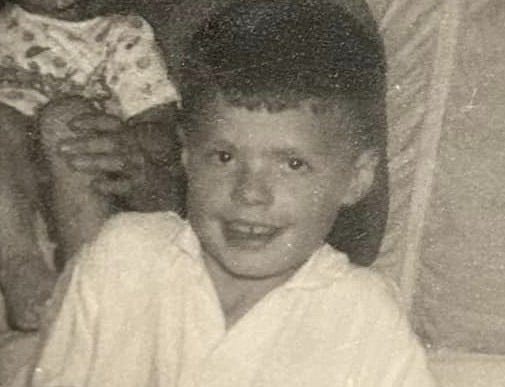
I was an eight-year-old boy in an army family when we travelled to our father, who had been posted to Terendak Camp, a military establishment located near Malacca, Malaysia. British, Australian, and New Zealand units were stationed there, and a large cemetery for those who died in the Vietnam War remains there to this day. As children, we roamed the wooded area with small rivers and occasional wild animals, such as hordes of monkeys that forced us to stay indoors.
The long beaches were inviting, but Portuguese men-of-war, venomous colonial marine organisms often mistaken for jellyfish, were often found floating on the ocean surface. They can deliver painful stings to humans. They were often washed up on the beach with normal jellyfish and caused several casualties, sometimes death. My brother, Colin, and I escaped when we were playing with a log in shallow water, but a child who took our place was stung as we were preparing to go home.
Once, my father and I were trapped on a small rock outcropping while fishing in the evening because we were surrounded by organisms that glowed in the moonlight. He also caught stingrays from the beach that had to be incapacitated immediately for fear that they would injure or even kill us with their sting. He also caught the occasional fish that resembled a small shark. There were enough dangers, including snakes and scorpions. Once, a wandering python even swallowed a pig belonging to the indigenous people living in the camp.
Looking back, my friends and I were always getting into trouble. Sometimes we were scolded for running naked through the woods. Other times, we needed help when someone fell into a swamp. Then there were the times when we took a bike that didn’t belong to us and were chased by the owners until we were out of sight. We got up to a lot of adventures, many of which were not mentioned at the dinner table or at all … and sometimes, the trouble came from people we were supposed to trust.
I was sent on a scouting weekend, then as a ‘Cub’ and a very impressive young boy who was nervous about sleeping out for the first time in small huts and overseen by adults. I hardly remember what happened there except that in the night, I awoke being fondled by a man, who whispered in my ear that I could touch him too. Anyone can imagine the fear that gripped me and how I was not prepared to deal with the incident at that young age. Most importantly, it was a person of authority, and he used that authority to ensure my silence.
The experience is harrowing enough, but worse than that was the feeling I couldn’t tell anyone. It felt like shame and something I could not confess to, although I had been molested. Often, I have heard from adults who were molested as children, even raped, and who, like me, didn’t tell anyone. It affected them deeply, but they were alone with that experience, and like me, often had nightmares that brought it back with an immediacy that made us wake up shouting.
When finally telling a physician or a psychologist, we often think that the experience is the trauma, but Gabor Maté pointed out that, as bad as the experience is, what makes it traumatic is not being able to tell someone. Being left to cope with the experience is the beginning of trauma, which can, of course, be even worse if someone does speak out and is accused of causing it to happen, as many women who were raped have experienced. But more common than that are the molesters who do enough damage.
What is the Question?
In a conversation on YouTube, Gabor Maté made another point when he asked a victim, “If this were to happen to your child and they couldn’t talk to you about it, how would you explain it?” The answer was, of course, “I’d be devastated!”
But he said, “That’s how you feel, which is understandable, but how would you explain it?”
“I would have to acknowledge that I hadn’t created an atmosphere in which my child could tell me everything,” the victim answered.
“That is the problem,” he answered. “That is where trauma begins. When the child feels alone holding something that they can’t reveal.”
The reason for writing this isn’t a wound that still hurts me, but the realisation that thousands, perhaps hundreds of thousands of children with learning disabilities, depression, marked behaviour, unexplained aggression, may be carrying something around that they can’t disclose to anyone.
At about ten, after we had returned to the UK and settled again, I started writing profusely. It was, unsurprisingly, nothing that was entertaining, but it showed that something was up. Something was churning me up, and it could have been any number of experiences that I had, whether being molested, the sudden return to the UK after my parents had a disagreement, being drawn into the tearful conversation that led to them joining up again, feeling uprooted and extraneous in schools in which I felt ignored. When I finally gained a foothold, we were whisked away again and returned to my hometown, where I have already said I felt displaced.
That experience altered how I later understood parenting and community, and these are not particularly unusual events, which is precisely the point.
It Takes a Village
My parents were good to my siblings and me. Like all parents, they were only equipped with what they had learned from others—in particular, their own parents. Much parenting is inherited emotionally rather than consciously. People often reproduce either what wounded them, what protected them, or a confused mixture of both. My wife and I were well advised in that we attempted to do things differently from how we grew up, but even then, we made our mistakes.
In particular, I feel that the fragmentation of life, including for military families, leaves us ill-equipped for parenting, and that was why my wife and I tried to build a stable home, which we managed to do, but in the Nigerian Igbo culture, they say, “Oran a azu nwa,” which means “It takes the community to raise a child.” The phrase gained popularity in the West through Hillary Clinton’s 1996 book, It Takes a Village.
This saying reflects the idea that raising a child is a communal effort involving various individuals, including parents, teachers, and neighbours, rather than the sole responsibility of one family. In Nigerian Igbo culture, it is far more organic, and the village sees the children as “our children.” In many communities in the West, we do not usually associate with other people’s children in that way, but for a brief few years, my wife and I had friends and neighbours who did.
But what is the general state of community today?
I think this is something many people feel but struggle to articulate: modern life has become socially fragmented at the very moment when raising children has become more psychologically demanding. The older structures that once carried families - extended kinship, neighbourhood familiarity, shared rituals, intergenerational wisdom, religious communities, apprenticeships, and communal work - have weakened in much of the modern West. Parents are often left to perform, alone, a task that was once distributed across an entire social fabric.
The Igbo saying recognises a profound anthropological truth, that a child does not merely learn from instruction but from immersion in a living community. A healthy culture surrounds the child with many models of adulthood, many sources of correction, affection, discipline, humour, memory, and belonging. A single exhausted nuclear family cannot fully replace that, and many “tribal” influences are ideologically manipulated.
The strain is intensified when mobility disrupts continuity, when friendships are temporary, and grandparents are often distant. It is then that children repeatedly lose schools, communities, and familiar adults, and when, as we have seen, parents themselves perhaps carry the effects of trauma, stress, or emotional isolation, parenting easily becomes reactive rather than rooted.
Re-imagining Community
By now, it should be clear that this is a fundamental problem of our time. We thought that being individualists was a sign of modernity, and some even told us that children shouldn’t be coddled. Gabor Maté also spoke about his conversation with Prince Harry regarding the loss of his mother, and how coldly Prince Charles responded, merely touching his knee instead of embracing him. However, Charles himself grew up in a formal environment that shaped him.
Children need regular contact with caring adults besides their parents. Older people transmit patience, stories, continuity and perspective. Modern societies often segregate age groups into institutions such as schools, workplaces and retirement homes. The result is loneliness at every age, with many people now living beside one another without truly knowing each other. Yet small acts matter enormously:
shared meals,
informal childcare;
checking on one another;
local celebrations;
mutual aid.
or simply being familiar faces.
Community begins less with ideology than with repeated presence, and we have tried to encourage this kind of interaction in our house, which we share with fifteen other households, but each of us is swayed by their experience.
Unfortunately, parents are often economically and psychologically overextended. A culture organised entirely around productivity leaves little room for attentiveness, which children require. Children are formed not mainly by “quality time” but by unhurried participation in ordinary life. It is this attention that we especially owe our children. Digital connection cannot fully replace embodied presence.
Communities become fragile when people no longer share even minimal understandings of duty, sacrifice, truthfulness, or responsibility. A child needs not only affection but coherence. Modern societies frequently offer freedom without orientation. Healthy communities usually require physical gathering places, but these are less frequented or simply no longer available. Churches have lost their caring character, suggesting more of a moral instance, and clubs cater to specific interests but seldom to the community. Cafés are good meeting places for friends and acquaintances, but would require a concerted effort to build a community.
Libraries and communal gardens are places we visit but seldom build community, unless there is a group active doing so. Sports groups and music and arts communities have a greater chance of a longer interaction and developing community where human beings regulate one another emotionally through proximity, voice, touch, and shared activity.
Caregiving
Modern economies reward competition and visibility over caregiving. Yet raising children, caring for the elderly, teaching, mentoring and nursing are among the most civilisation-preserving acts that humans perform. Societies that undervalue care slowly undermine themselves, as many parents today are attempting to raise children while dealing with their own unresolved grief, anxiety, exhaustion or trauma. Therefore, communities must not only educate children but also mutually support adults. Otherwise, each new generation starts out depleted.
There is also an irony in modern individualism: although we have unprecedented personal freedom, many people feel profoundly unsupported. The traditional village community could be restrictive, but it also shared burdens collectively. We have dismantled much of that structure without replacing its human functions. Rather than a romantic return to the past, after all, older communities also had injustices and exclusions; perhaps what is needed is a recovery of certain principles, such as mutual responsibility, belonging to a local community, the value of interdependence, continuity between generations and the understanding that human beings are formed through relationships rather than isolation.
When communities fracture, parenting becomes immeasurably harder because parents have to provide an entire culture by themselves. Ultimately, a child learns what humanity is by observing how adults interact with each other. In this way, we might build a communal spirit in which children feel protected yet free to speak about anything without fear of stigma. They may then feel motivated to pass on such an environment to others and co-create a community.
Less of them would then confess later in life, “I never told anyone.”
I had a similar experience as a young teenager on a campout with a respected schoolteacher and church member. I knew I could not tell, as I would then be labeled and thought differently of by my peers, and the perpetrator would deny it ever happened and be believed. While the actual experience was minor, I lived in guilt knowing he probably assaulted others due to my silence.